From the Spice Road
The Art of Flavour Food Blog
From the Spice Road
The Art of Flavour Food Blog
Spice Road for the Art of Flavour
Continuing our chat about natural aromatics and Marinades last Sunday, we should now consider Rubs, and in particular, two most commonly used by cooks when creating great flavour at home. The Traditional Rub and the Bark Rub.
To explain a Bark Rub. Bark is another of those wonderfully eccentric flavour descriptions that pop up from time to time and in their own way, add greatly to the fun and pleasure of cooking.
The term for Bark is really a Maillard Reaction, named after a Frenchman (who else) Louis – Carmille Maillard, a scientist who discovered the reaction between the amino acids and sugars (glucose and fructose) on dry meat when the surface meat temperature reaches 150 – 165c, giving a lovely dark crust or Bark.
Given that the term Maillard Reaction is a bit much to handle on a Sunday morning, for the purpose of this short piece, we will return to the description, Bark.
The Bark Effect
Make no mistake, Bark once mastered, delivers awesome flavour for meats, either grilled or from a BBQ. The key is the meat surface must be totally dry otherwise there will be no reaction and no flavour.
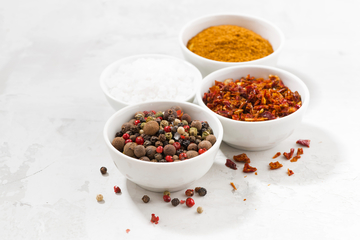
A Traditional Rub, by contrast, is the cooks own creative blend of dried spices, rubbed or massaged into the meat before cooking. Should a paste style be preferred then a little mustard and olive oil is added without being runny. Easy.
Lost Spice Flavour
When chatting about spices there is always an important thing ! With a Traditional Rub the important thing is the spices will need to be freshly ground for best flavour. Pre ground spices from the store will have lost a degree of flavour so this will need to be considered.
Both these natural aromatics are wonderful for cooks when time is short. On a busy night simply rub your Traditional Rub into the meat or poultry, allow 30 minutes in the fridge and natural flavour will be in place ready to compliment your choice of protein.
Take care everyone
Arthur Huxley